
Easter Sunday Starts with Pastiera Napoletana
A softly scented Neapolitan Easter tart with ricotta, tender wheat, and orange blossom, meant to be baked ahead and shared in slow, happy slices around the holiday table.
Published: March 29, 2026
Jump to RecipeDisclosure: This post contains affiliate links. If you click on one and make a purchase, I may receive a small commission at no additional cost to you. As an Amazon Associate, I earn from qualifying purchases.

This classic Pastiera Napoletana is all about Easter: a tender shortcrust filled with creamy ricotta, soft wheat berries, citrus, and orange blossom, baked the day before so the flavors can bloom just in time for a slow Sunday slice with family.
Easter Mornings in My Seattle Kitchen, with a Neapolitan Tart on the Counter
The first thing I notice is the smell: orange blossom and lemon drifting through a quiet Seattle house, the way it did one rainy Easter Sunday in 2018 when I pulled my very first pastiera out of the oven at 7 a.m. The crust was still faintly warm, the ricotta and wheat filling barely quivering, and there was this soft, floral steam every time I leaned in too close.
That year, my friend Chiara from Naples sent me a voice message walking me through her family pastiera, complete with her dad banging pots in the background. I had the jar ofgrano cottofrom the Italian market on Rainier, orange blossom water I had been slightly afraid to use, and a very ambitious plan to show up at Easter brunch with something more interesting than hot cross buns.
I also had no idea how stubborn this tart could be. My first attempt tasted lovely, but I sliced it after only four hours of rest because I was running late. The center flowed across the plate like a very fragrant lava, and the beautiful lattice I had fussed over just sort of slid south. Everyone was kind, but I knew it was wrong the second the knife went in.
That is when I finally understood what every Neapolitan recipe note means when it says that pastiera is baked for Easter but eatenafterEaster. This is a tart that needs time as much as it needs butter and eggs: time to let the milk-softened wheat relax into the ricotta, time for the orange blossom to calm down from perfumed to gentle, time for the custard to set so you can cut dignified slices instead of scoops.
That is what this recipe is about for me now: giving Easter Sunday a head start with a tart that is baked the day before, rests overnight, and waits on the counter for that first slow slice while coffee brews and kids rustle for baskets.
Why This Ricotta–Wheat Tart Belongs on the Easter Table
There is a particular quiet hum that happens in a house the morning of a holiday: coffee grinders, chair legs, someone rustling through a drawer for the good knives. Pastiera fits right into that soundtrack, because it does its work the day before and simplyisthere when everyone wakes up.
Pastiera Napoletana is traditionally tied to Easter in Naples, and you can taste why. The filling is built on ricotta, tender wheat, eggs, and just enough orange blossom and citrus to feel like spring without turning perfumey. The crust is an orange-scentedpasta frollathat behaves like a cross between tart dough and shortbread: sandy, melt-away, and sturdy enough to hold a very generous amount of custard.
The way this recipe is structured, it naturally fits into an Easter weekend rhythm. You will see in the recipe card that it calls for about 45 minutes of hands-on prep time, plus an hour for the dough to chill, about 75 minutes of baking, and at least 8 hours of resting once it is baked and cooled. Add that all together and you are looking at around 12 hours start to finish, most of it completely hands off.
For me, that means making the dough and cooking the wheat in milk in the late afternoon the day before, assembling and baking in the evening, and then letting the tart rest overnight as the flavors bloom. On Easter morning, while other people are proofing yeasted doughs or frosting cakes, I am just dusting a bit of powdered sugar over a tart that has already done its time.
So if you are planning a brunch spread, packing up something special to bring to family, or just want Easter Sunday breakfast to feel a bit more ceremony than scramble, this softly scented Neapolitan tart slots in beautifully. It tastes like it was fussed over, but all the real fuss happened yesterday.
The Ingredients That Make Pastiera Taste Like Easter, Not Just Ricotta Pie
When I press my fingers into the bowl of flour and powdered sugar and catch that first breath of lemon zest, I already know if this pastiera will taste right. The scent at that moment tells you almost everything: bright but not sharp, buttery even before the butter goes in, floral in a way that whispers rather than shouts.

Pastiera can look, at a glance, like a simple ricotta pie. The difference lives in the details: the way the citrus is handled, how the wheat is cooked, the choice of sugar in the crust, and the balance of aromatics in the filling. Here is how the key ingredients work in this recipe.
Orange-scented pasta frolla crust
This dough has its own personality. It is not a standard American pie crust, and it is not quite a sugar cookie either. It is short, tender, and just strong enough to support a deep custard without turning hard.
- All-purpose flour (250 g) – Regular all-purpose flour gives enough structure to roll and weave the lattice, but it is not high in protein like bread flour, so the crust stays tender instead of tough.
- Powdered sugar (100 g) – Using powdered sugar instead of granulated is one of the non-negotiables for the texture here. Those tiny sugar crystals and a bit of cornstarch help the dough bake up with a fine, sandy crumb that almost dissolves on your tongue.
- Unsalted butter, cold and cubed (125 g) – Cold butter is rubbed into the flour until you see coarse sandy crumbs with some pea-sized bits left. Those little butter pockets are what create the short, crumbly texture when they melt in the oven.
- Egg and extra yolk – One whole egg plus an extra yolk give richness and color. The yolk adds fat and emulsifiers, which makes the dough more pliable and less prone to cracking when you roll it thin for the lattice.
- Fine sea salt (1/4 teaspoon) – Just enough to keep the sweetness from feeling flat.
- Finely grated lemon zest (1 teaspoon) – Rubbed directly into the flour and sugar with your fingertips for 20–30 seconds, the zest perfumes the entire dough instead of lurking in random sharp bits.
- Vanilla extract (optional, 1/2 teaspoon) – Not traditional everywhere, but a little vanilla rounds out the citrus and orange blossom and makes the crust taste more like a pastry and less like a cookie pressed into service.
When I tested a batch where I skipped rubbing the zest into the dry ingredients and just tossed it in, the flavor was patchy: some bites almost bitter, others bland. Taking that extra half minute to massage the zest into the flour changed everything; the lemon came through as a soft halo instead of a surprise jab.
Milk-softened wheat: grano cotto and its stand-ins
Open a jar ofgrano cottoand you will smell something faintly nutty and a little starchy, like cooled oatmeal. Straight from the jar, the grains are firm and a bit bouncy under your teeth. That is not what you want floating in a silky custard.
- Cooked wheat for pastiera (grano cotto, 200 g) – These are wheat kernels that have already been simmered until cooked through. In this recipe, they are drained and then cooked again gently in whole milk and flavorings to turn them from chewy grains into something closer to a creamy porridge.
- Whole milk (200 ml) – The milk is what transforms the wheat. As it simmers, the starches on the surface of the grains swell and take in liquid, so the texture becomes plump and soft instead of rubbery. Whole milk adds a bit of fat for richness.
If you cannot find jars ofgrano cotto, the recipe notes suggest cooked soft wheat berries or pearled farro simmered until very tender as a stand-in. That swap, plus the step of cooking them again in milk until creamy, is the difference between a filling with hard, distracting kernels and one where the wheat almost melts into the ricotta.
Ricotta, eggs, sugar, and the spring aromatics
The filling smells like a bakery the second you stir everything together: warm dairy, citrus, and that unmistakable floral note from orange blossom water.
- Ricotta – Use full-fat ricotta and, if it looks wet, let it drain briefly so you are not adding extra liquid to the custard. Too much moisture and the center will struggle to set, even with a long bake.
- Eggs – They are the backbone of the custard. The proteins set gently in the oven to hold the ricotta, wheat, and sugar in a smooth sliceable texture.
- Sugar – Sweetens and also helps the custard brown and firm. Balance matters here; pastiera is meant to be sweet enough for dessert but restrained enough to eat with coffee at breakfast.
- Orange blossom water – This is where restraint pays off. Use the amount listed in the recipe card; when I got heavy handed in one test batch, the whole tart veered into soapy territory. The right amount tastes like walking past a citrus tree in bloom, not drinking perfume.
- Citrus zest and candied peel – Finely grated orange or lemon zest and small cubes of candied citrus give tiny bursts of brightness. You want them chopped small so they punctuate the filling instead of dominating it.
All together, these ingredients create the particular texture and flavor that make pastiera feel like Easter: soft but sliceable, floral but never cloying, sturdy enough to travel but light enough to enjoy after a big meal.
From Floury Fingers to Orange Blossom Steam: How the Process Unfolds
The sound of pasta frolla coming together is a quiet one: the whisper of flour against the bowl, the soft thud of butter cubes, the faint squelch as egg and yolk finally bind the crumbs into a dough. That hush at the beginning is a nice counterpoint to the moment later when the tart emerges from the oven and crackles softly as it cools.
Here is how the process flows, with a focus on what you should be seeing and feeling at each stage so you know you are on the right track.
Building and resting the citrus-kissed dough
You start by whisking together the all-purpose flour, powdered sugar, and fine sea salt until they are completely blended. Then the lemon zest goes in, and you take a moment to rub it between your fingers with the flour until the smell changes from plain starch to something bright and fragrant. This step is not just a nice sensory moment; it physically releases the oils in the zest, which then cling to the flour and distribute evenly through the dough.
Cold butter cubes join the party next. Using a pastry cutter or just your fingertips, you rub or cut the butter into the flour. At first it looks shaggy and messy, but keep going until you have a mixture that looks like coarse sand with some pea-sized bits of butter still visible. It should feel cool and slightly damp when you squeeze a handful; it should just barely hold together and then fall apart again.
In a small bowl, you lightly beat the egg, the extra yolk, and the splash of vanilla if you are using it. That mixture gets drizzled over the sandy dough, and you switch to a fork or your fingertips, gently tossing until clumps start to form. Once most of the dry bits are moistened, you bring the dough together with your hands, pressing rather than kneading, just until it forms a cohesive disk.
At this point, the dough should feel smooth on the surface but still a little fragile if you try to pull it apart. Wrap it and let it chill as directed in the recipe card, usually about an hour. Skipping or shortening this rest is one of the fastest ways to end up with a sticky, uncooperative dough and a crust that shrinks too much in the oven.
Coaxing the wheat into creaminess
While the dough rests, you turn your attention to the wheat. When the grano cotto goes into the saucepan with whole milk, it will look like a thin soup at first. As it simmers gently, you can hear the occasional soft pop of bubbles and see the mixture thicken from loose to porridge-like.
What you are watching here is the wheat starch absorbing liquid. As food science writers like Harold McGee have explained, starch granules swell and gel as they heat with water or milk. In this recipe, that means the wheat becomes creamy and soft enough that it blends into the custard instead of behaving like chewy add-ins.
Cook the wheat in milk until it has the texture of a loose risotto: creamy, with the grains suspended and no spare puddle of milk around them. Then let it cool to room temperature before you mix in the ricotta and eggs. If you add eggs to a mixture that is still hot, you risk scrambling them and ending up with tiny curds in the filling.
Bringing together crust, filling, and lattice
Once the dough is chilled and the wheat mixture is cool, you are ready to assemble. Rolling the dough should feel a bit like working with cool playdough: it will crack slightly at the edges but be easy to coax back together with your fingers. If it is shattering into pieces, it is probably too cold; give it a few minutes on the counter to soften.
You roll out most of the dough for the base and press it into your tart pan, making sure the bottom is an even thickness and the corners are not too thin. A light dusting of flour under the dough helps it move without sticking, but try not to overdo it; extra flour can toughen the crust.
The filling comes together in a separate bowl: creamy ricotta, sugar, eggs, the cooled milk-softened wheat, orange blossom water, citrus zest, and any candied peel. When you whisk it, the mixture should look smooth and pourable, thicker than heavy cream but much looser than cheesecake batter. If it seems very thin and runny, check that your ricotta was drained and that you measured everything carefully.
Pour the filling into the lined pan. It will look quite full, but remember the dough is sturdy and the custard sets surprisingly firmly given the amount of liquid. Then you roll the remaining dough into thin strips and lay them over the top in a loose lattice. Pastiera does not need a perfectly geometric lattice; slightly uneven strips feel honest and homemade.
Bake according to the time and temperature given in the recipe card. Near the end of baking, your kitchen will smell like a mix of pastry shop and citrus grove. The filling should be puffed slightly and just set in the center, with a gentle wobble if you nudge the pan. The lattice and crust edges will be a rich golden color.
Once it is out of the oven, let the pastiera cool completely at room temperature. The center will continue to set as it cools, and the aroma of orange blossom and citrus will soften from sharp to mellow. Only after it has cooled do you cover it and let it rest for those crucial hours.
What I Learned from Three Batches of Soggy-Centered Pastiera
The sound of a knife sinking into a well-set pastiera is a soft, satisfying glide. The sound of a knife hitting an under-set center is closer to a squish, and I have heard that one more than once.
By the time I was happy enough with this recipe to share it, I had baked five full tarts. Two of them had some version of the soggy-center problem. Here is what went wrong and what finally worked.
Batch one:I followed the ingredient quantities faithfully but got impatient with the bake. I pulled the tart from the oven when the edges were deeply golden but the center still looked a little glossy, baking about ten minutes less than the time listed in the recipe card. After cooling, I gave it only about four hours of rest before slicing. The center had a custard puddle, and the wheat grains clumped at the bottom of each slice.
What I changed:On the next attempt, I trusted the visual clues instead of the color alone. I left the tart in the oven until the center had only a very slight wobble and no obvious liquidy shine. Then I let it cool completely, covered it, and left it at cool room temperature overnight, giving it at least the recommended eight hours of rest.
Batch two:I got bold with the orange blossom water, adding an extra splash beyond what the recipe calls for. The scent when it baked was incredible, but once cooled, the tart tasted almost bitter and floral in a way that coated the back of my throat.
What I changed:I went back to the measured amount and let the tart rest the full time. Overnight, the floral note settled into the background, keeping its character without overwhelming the wheat and ricotta.
Batch three:I used ricotta straight from the container, which was noticeably wet. The tart baked and set, but the texture was a bit uneven: the center felt almost too moist, and the edges were firmer.
What I changed:Now, if my ricotta looks at all loose, I let it drain briefly in a fine sieve before mixing the filling. This keeps the total liquid in the custard predictable and helps everything set evenly from edge to center.
Those small tweaks – a full bake time, a proper overnight rest, measured aromatics, and mindful ricotta – are what transformed my pastiera from slightly chaotic to reliably sliceable.
The Gentle Science Behind Milk-Softened Wheat and the Overnight Rest
When you cut into a fully rested pastiera, you can feel the subtle resistance of the custard against the knife, then the give as it yields in a clean slice, with tender wheat kernels suspended evenly throughout. That texture is not an accident; it is the result of some quiet but important kitchen chemistry.
How milk turns grains into custard-friendly bites
Cooked wheat kernels have already softened once, but in this recipe they get a second, gentler simmer in whole milk. As the mixture heats, starch granules on and within the wheat absorb liquid and swell, a process food scientists describe as gelatinization. The milk thickens, the grains plump, and the whole mixture behaves more like a porridge than a bowl of grains in liquid.
Why that matters: when you later mix this creamy wheat base with ricotta, eggs, and sugar, the starches in the wheat help bind extra moisture and support the custard structure. Instead of distinct chewy bits popping out in each bite, you get a smoother texture with just enough grain to be interesting.
Eggs, ricotta, and a gentle set
Ricotta brings protein and moisture, while eggs act as the main setting agent. As the filling bakes, egg proteins unfold and link up into a network that traps water and fat. At the same time, sugar raises the temperature at which this network sets, so the custard can bake long enough for the wheat and crust to cook through without turning rubbery.
That is why pastiera is baked until just set with a little wobble. Take it out too early and the protein network is not strong enough to hold the custard once it cools. Bake it far past that point and the network squeezes out moisture, giving you a dry, grainy filling.
Why the overnight rest changes everything
The rest after baking is not just about flavor, although that is part of it. As the tart cools and sits, starch molecules in the wheat and in any flour present begin to retrograde – they reorganize and firm up slightly, which helps lock the structure in place. Moisture redistributes from the center to the edges, and the citrus and orange blossom mellow and blend.
From experience, the difference between a tart rested for four hours and one rested for at least eight is dramatic. The shorter-rested version tasted good but sliced messily and felt a bit loose in the center. After a full overnight rest, the texture turned silky, the slices held, and the flavors felt woven together instead of stacked.
It is the same idea as letting a cheesecake chill or a stew rest in the fridge overnight, but here it is not optional – it is part of what makes this tart taste and feel like a true pastiera.
Swaps, Shortcuts, and Staying True to Naples
The faint crunch of candied citrus and the soft perfume of orange blossom are what make my kitchen feel fleetingly Neapolitan each spring. Still, real life and grocery store realities sometimes demand a few adjustments.
If you cannot find grano cotto
The cleanest way to stay close to tradition is to follow the recipe note and use cooked soft wheat berries or pearled farro when you cannot get jars of grano cotto. Here is how I approach it:
- Simmer the wheat berries or farro in water until they are very tender, not al dente. You should be able to gently squash a grain between your fingers.
- Drain well, then measure the amount called for in the recipe (200 g) and proceed with the milk-softening step as written.
- Be sure to cook the grains in milk until the mixture has that loose-porridge texture before cooling and adding to the ricotta filling.
This swap keeps the spirit and texture of pastiera intact far better than, say, trying to use rice or omitting the grain entirely.
If orange blossom is hard to find or too strong
Orange blossom water can be purchased online or at Middle Eastern and Mediterranean markets, but sometimes it is simply not accessible. If you need to adjust:
- Use the citrus zest in the recipe plus a bit of vanilla extract and a touch of extra finely grated orange zest to lean into the citrus side of the flavor profile.
- Keep in mind that without orange blossom, the tart will still be lovely, but it will lean more toward a citrus-ricotta tart than a classic Neapolitan pastiera.
- If you are sensitive to floral flavors, you can also cut the orange blossom water slightly and let the tart rest a full day, which softens the floral edges.
Thoughts on crust and dietary tweaks
The crust in this recipe is designed specifically for a moist, deep filling. If you are tempted to swap in a gluten-free crust or a press-in cookie crust, just know that I have not tested those variations with this particular filling.
- Gluten-free: A sturdy gluten-free tart shell might work, but because the filling is quite moist and bakes for a fairly long time, you would want to choose a recipe known to hold up under custards. Expect some textural differences.
- Dairy-free: Pastiera relies on ricotta, milk, and butter for both flavor and structure. Non-dairy substitutes will change the personality of the tart completely. At that point you are really making another kind of dessert.
- Mini tarts: The filling and crust can be adapted to smaller tart pans, but you will need to adjust baking time. Smaller tarts bake faster; pull them when the centers are just set with a slight wobble.
My own compromise when baking for mixed crowds is to make one traditional pastiera and offer a second, simpler dairy-free or gluten-free dessert rather than trying to make this tart be everything for everyone.
If Your Pastiera Cracks, Leaks, or Will Not Set: Read This Before You Panic
The tiny tick sound of a cooling tart sometimes comes with a side of anxiety: is that the sound of a crust shrinking away from the pan, a filling sinking, a crack forming across your carefully woven lattice
Take a breath. Most issues with pastiera are fixable or, at the very least, not fatal. Here is how to read the signs.
Soupy or very soft center
What it looks like:After cooling and resting, the center still feels loose, and when you cut a slice, the filling bulges or oozes out.
Likely causes:
- Underbaking – The tart was pulled from the oven when the center was still quite jiggly or shiny.
- Too-wet ricotta – The cheese was not drained and added extra moisture.
- Not enough resting time – The tart was sliced before it had rested for at least the recommended eight hours.
What to do:If the tart is still fairly cool but clearly under-set, you can gently return it to the oven in its pan and bake longer, watching closely so the crust does not overbrown. If it is already sliced, serve it in slightly smaller wedges in bowls and call it a rustic custard tart. Next time, trust the wobble test and the full resting time.
Cracks on top
What it looks like:A visible crack running between lattice strips or along the edge.
Likely causes:
- Oven temperature running hot, causing the custard to puff too quickly.
- Overbaking past the just-set stage.
What to do:The good news is that cracks are mostly cosmetic. A light dusting of powdered sugar before serving does wonders. If your oven tends to run hot, consider lowering the temperature slightly next time and baking a bit longer, so the custard sets more gently.
Soggy bottom crust
What it looks like:The underside of the crust is pale and soft rather than golden and crisp, even after the full bake time.
Likely causes:
- Filling added when the wheat mixture was still warm, which slowed down how quickly the crust could set.
- Oven rack too high, so the bottom heat was not strong enough.
- Excess liquid in the filling from undrained ricotta.
What to do:Make sure the wheat mixture is cooled to room temperature before mixing the filling, and bake on a lower-middle rack to give the bottom crust good heat exposure. If your oven allows, a brief finishing bake with heat directed to the bottom can help firm things up.
Overly strong floral flavor
What it looks like:The tart smells and tastes strongly of orange blossom, with a slightly bitter or soapy aftertaste.
Likely causes:
- Too much orange blossom water used.
- Very fresh or very intense brand of orange blossom.
What to do:Time helps; flavors often mellow after another half day of rest. Serve smaller slices with unsweetened coffee or tea, which can balance the intensity. Next time, stick to the amount in the recipe card and resist the temptation to add more.
How to Time, Store, and Serve Pastiera Across a Holiday Weekend
There is a particular comfort in waking up on Easter Saturday to the faint scent of butter and citrus from a tart that cooled on the counter the night before. The hard work is done; now it is all about timing and care.
A practical make-ahead timeline
Because this recipe builds in an hour of dough chilling, about 75 minutes of baking, and at least eight hours of resting, it naturally wants to be a make-ahead project. Here is a rough rhythm that has worked well in my kitchen:
- The day before serving – Mix and chill the pasta frolla, cook the wheat in milk, and let it cool. Assemble and bake the tart according to the recipe card. Let it cool completely at room temperature.
- Overnight – Once cool, cover the tart lightly (a clean dish towel or breathable cover works well) and let it rest at cool room temperature for the first several hours so the flavors develop and the custard finishes setting.
Food safety guidelines for dairy-and-egg desserts lean toward refrigeration once they have cooled. Many Italian households keep pastiera at room temperature for a day or two in a cool kitchen; in my Seattle home, I usually let it rest on the counter until bedtime and then move it, well wrapped, to the refrigerator.
Short-term storage
Room temperature:A cooled, covered tart can sit at cool room temperature for several hours while you serve brunch or dinner.
Refrigerator:For longer storage, wrap the tart or slices well and refrigerate. The texture stays lovely for about 3–4 days. Bring slices back toward room temperature before serving for the best flavor and texture.
Freezing and thawing
Pastiera is rich enough that you might have leftovers even after a large gathering. To avoid wasting them:
- Cut the cooled tart into slices.
- Arrange the slices on a parchment-lined tray and freeze until firm.
- Transfer to airtight containers or freezer bags, separating layers with parchment.
Frozen slices keep for about 1–2 months. Thaw in the refrigerator overnight, then let them sit at room temperature for a short while before serving. The texture will be slightly different – a bit denser – but still very enjoyable.
Slicing into Easter: Portions, Pairings, and Nutrition
The first cut into a pastiera is my favorite: the faint crackle as the knife meets the lattice, the way the slice lifts out showing pale custard flecked with wheat and citrus against that golden crust.
How big to slice and what to serve with it
This recipe makes one 9-inch tart, which I usually cut into 12 slender wedges. The filling is rich with ricotta, eggs, and wheat, so smaller slices feel just right, especially after a big holiday meal or paired with other brunch dishes.
Pastiera is lovely at cool room temperature. If it has been in the fridge, let it sit out for a bit before serving so the aromas open up. A light dusting of powdered sugar just before it hits the table looks beautiful against the lattice and helps hide any small cracks or imperfections.
For pairings, I like strong, simple drinks that will not compete with the floral notes:
- Espresso or stovetop coffee
- Strong black tea
- Lightly sweetened cappuccino or caffe latte
Because the tart is not overly sweet, it works nicely as a late-morning treat as well as a dessert after Easter lunch or dinner.
Approximate nutrition per slice
Homemade desserts are about pleasure and tradition first, but I know it can be helpful to have a rough idea of what you are serving. Based on typical ingredients and portion sizes, an estimated nutrition breakdown for one of 12 slices is approximately:
- Calories: around 380–420
- Total fat: 22–25 g
- Saturated fat: 13–15 g
- Carbohydrates: 38–45 g
- Protein: 9–11 g
- Sugar: 22–26 g
- Fiber: about 1–2 g
These numbers are estimates calculated from standard ingredient databases and will vary depending on the exact brands and quantities you use. The tart contains wheat, dairy, and eggs, and is suitable for a vegetarian diet that includes those ingredients.
Pastiera Questions I Hear Every Spring
By the time cherry blossoms start appearing on our Seattle streets, my inbox and text messages begin to fill with the same kinds of questions, usually while someone is standing in the baking aisle, staring at a jar of wheat or a bottle of orange blossom water.
Can I make pastiera without wheat
Technically, yes, you can make a ricotta and citrus tart without wheat, but it will not really be pastiera. The tender, milk-softened wheat is one of the defining elements of this dessert. If you truly need to avoid wheat kernels, I would suggest choosing a different ricotta-based tart rather than trying to force this one to fit.
Do I have to let it rest the full eight hours
For the texture and flavor to be at their best, yes. I have cut into a tart at the four-hour mark, and while it was edible, the slices were messy and the flavors felt disjointed. The recipe total time of around 12 hours, with at least 8 hours of resting built in, is there for good reason.
How do I know when the tart is fully baked
Look for visual and tactile clues:
- The filling around the edges will be puffed and set.
- The center will have a gentle wobble if you nudge the pan, but it should not look like liquid.
- The lattice and crust edges will be a deep golden color.
Trust these signs alongside the bake time given in the recipe card. If in doubt, it is safer with this tart to lean a little toward fully set, since the custard is protected by the wheat and ricotta and is unlikely to go dry quickly.
Can I use part-skim ricotta
You can, but the texture will be slightly less creamy and the filling may set a bit more firmly. If you choose part-skim, be extra careful about draining off any excess liquid, since you do not have as much fat to buffer the moisture.
What if I do not like candied citrus
Candied citrus is traditional and adds lovely chewy-sweet bursts, but if it is not your thing, you can reduce the amount or leave it out. In that case, I like to add just a bit more finely grated fresh orange zest so the filling still has those sunny notes.
Is it safe to leave the tart out overnight
Many traditional recipes call for leaving pastiera at room temperature to rest overnight in a cool kitchen. In my own house, I let it cool, leave it out for several hours while it begins its rest, and then transfer it, covered, to the refrigerator before bed, especially if my kitchen is warm. If you have specific food safety concerns or health conditions, it is always best to follow current guidelines or consult a professional.
However you handle the logistics, the spirit of this tart remains the same: it is meant to be made ahead, to sit and settle, and to greet Easter Sunday not as a project but as a promise already fulfilled.
Kitchen Essentials
The exact tools and ingredients matches I use in my kitchen to get that perfect cookie texture.
Affiliate DisclosureBest Cookie Recipe is a participant in the Amazon Services LLC Associates Program, an affiliate advertising program designed to provide a means for sites to earn advertising fees by advertising and linking to Amazon.com. As an Amazon Associate, I earn from qualifying purchases. This post may contain affiliate links, which means I make a small commission at no extra cost to you.

Maggie's Pick
Amazon Basics
Freezer Bag
"Plastic bag designed for freezing food"

Maggie's Pick
Hamilton Beach Professional
Hand Mixer
"Electric tool for blending ingredients quickly"

Maggie's Pick
Riveira
Wooden Spoon
"Manual stirring tool for mixing ingredients"

Recipe
Easter Sunday Starts with Pastiera Napoletana
A softly scented Neapolitan Easter tart with ricotta, tender wheat, and orange blossom, meant to be baked ahead and shared in slow, happy slices around the holiday table.

PREP45min
BAKE75min
CHILL600min
YIELDone 9-inch tart (12 slices)
TEMP350°F
LEVELintermediate
COST$18
SEASONspring
all-purpose flourpowdered sugarbutteregg yolk
dessert
mediterranean
vegetarian
Ingredients for Easter Pastiera Napoletana with Ricotta, Wheat & Orange Blossom
Portion:
For the orange-scented pasta frolla crust
For the milk-softened wheat (grano cotto base)
For the ricotta, orange blossom & candied fruit filling
To assemble and finish the Neapolitan tart
Recipe Video
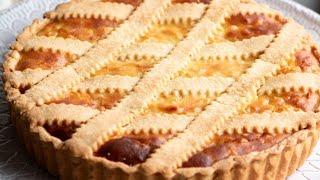
Pastiera Napoletana (Easter Italian Ricotta pie)
3:51
Pastiera Napoletana (Easter Italian Ricotta pie)
Production by Inside The Rustic Kitchen
Step-by-Step: Baking Pastiera Napoletana for Easter Morning
Make the Orange-Scented Pasta Frolla Crust
1
Combine dry ingredients and citrus
In a medium bowl, whisk together theall-purpose flour,powdered sugar, andfine sea saltuntil no streaks remain. Add thefinely grated lemon zestand use your fingers to rub it into the flour mixture for 20–30 seconds. This releases the oils from the zest and lightly perfumes the flour.
Why this matters:Powdered sugar and a well-dispersed zest give the pasta frolla its sandy, melt-away crumb and a gentle citrus aroma instead of random sharp lemony bites.
Don’t skip rubbing the zest into the flour. When I tested a batch where I just tossed it in, I kept biting into little bitter lemon “hot spots” instead of getting an even, soft citrus note.

2
Cut in the cold butter
Add thecold, cubed unsalted butterto the bowl. Using a pastry cutter or your fingertips, cut or rub the butter into the flour mixture until it looks like coarse sand with some pea-sized bits of butter still visible.
Why this matters:Those little butter pieces melt in the oven and leave behind tiny air pockets, which is what makes the crust short, tender, and crumbly instead of tough.
Work quickly so the butter stays cold. The one time I lingered and the butter softened, the dough baked up denser and lost that lovely shortbread-style crumble.

3
Add eggs and vanilla, then bring the dough together
In a small bowl, lightly beat theegg,egg yolk, andvanilla extract(if using). Pour over the butter-flour mixture. Use a fork to gently toss until the dough starts to clump, then switch to your hands and press the dough together into a smooth ball. If it feels dry and won’t hold, knead just 2–3 times in the bowl until it comes together.
Why this matters:You want to hydrate the flour just enough so it holds together, but not so much that you develop gluten. Overmixing = chewy, bready tart shell, which fights with the soft custard.
If you see dry flour at the bottom, resist the urge to keep kneading aggressively. Press and fold instead. In one early batch I treated it like pie dough and overworked it; it shrank dramatically in the oven and climbed down the sides of the pan.
4
Chill the dough
Flatten the dough into a thick disk, wrap it tightly in plastic wrap, and refrigerate for at least1 hour, or up to 24 hours. Chilling relaxes any gluten that formed and firms up the butter again.
Why this matters:A well-chilled dough is easier to roll, less likely to crack, and much less likely to slump or shrink when it hits the heat.
Don’t rush this. The one time I tried rolling after a 20-minute chill because I was impatient, the dough was sticky, tore as I lifted it, and baked up with a thick, uneven edge.
Cook the Wheat in Milk (Grano Cotto Base)
1
Simmer the cooked wheat with milk
In a small saucepan, combine thedrained cooked wheat (grano cotto)andwhole milk. Set over medium-low heat and bring just to a gentle simmer, stirring frequently so nothing sticks to the bottom. Continue to cook for about 10–15 minutes, until the milk has mostly absorbed and the mixture looks thick, creamy, and porridge-like.
Why this matters:Pre-cooking the wheat in milk softens the grains and coats them in starch. In the finished tart, they blend into the custard instead of feeling like hard, separate bits.
If you rush this step and leave the wheat still firm, you’ll taste distinct chewy grains in every bite. I did this once when I turned off the burner too early, and the texture felt more like rice pudding baked into a tart than the smooth, unified filling you’re aiming for.

2
Cool the wheat mixture completely
Scrape the thickened wheat mixture into a shallow bowl or onto a plate and spread it out so it cools faster. Let it cool to room temperature before you mix it into the ricotta base.
Why this matters:Adding hot wheat to cold ricotta and eggs can partially scramble the eggs and make the filling grainy instead of silky.
If you’re in a hurry, pop the bowl into the fridge, stirring once or twice, until it’s cool. Just don’t skip the cooling entirely—I’ve watched a beautiful ricotta mixture curdle when warm wheat went in too soon.
Prepare the Ricotta-Wheat Filling
1
Blend ricotta, sugar, and flavorings
In a large mixing bowl, combine yourricotta,sugar, and anyorange blossom wateror additional citrus flavorings listed in your ingredients. Whisk or beat until the mixture is smooth, creamy, and no gritty sugar crystals remain.
Why this matters:Starting with a smooth ricotta base prevents little curds and sugar pockets from showing up in the final slices. Think of it as polishing the custard before it goes into the oven.
If your ricotta is especially wet, you can drain it in a fine sieve for 30 minutes before this step. When I skipped draining with a very soft ricotta, the filling took much longer to set and the center stayed a bit weepy even after a long rest.
2
Add eggs and then the cooled wheat
Whisk theeggsinto the ricotta mixture one at a time, mixing just until incorporated. Once the wheat mixture is completely cool, fold it gently into the ricotta base with a spatula until evenly distributed.
Why this matters:Adding the eggs one by one keeps the mixture smooth and helps avoid over-beating, which can incorporate too much air. Too much air can cause the pastiera to puff dramatically and then collapse as it cools.
If you see streaks of wheat, keep folding from the bottom of the bowl up and over. Don’t whisk vigorously at this stage—that’s how I ended up with a filling that rose like a soufflé and then sank, leaving a wrinkled top.

Line the Tart Pan and Assemble
1
Roll out the chilled pasta frolla
Lightly flour your work surface and rolling pin. Unwrap the chilled dough and tap it a few times with the rolling pin to soften it slightly. Roll it out into a circle about 1/8–1/4 inch (3–5 mm) thick and large enough to fit a9‑inch tart panwith a little overhang.
Gently roll the dough around the pin, lift it, and unroll it over the tart pan.
If the dough cracks, don’t panic. Press it back together with your fingers—pasta frolla is forgiving. When I tried to roll it too thin to make it “fancy,” I ended up with lots of cracks and patch jobs. Slightly thicker is safer and still feels delicate once baked.
2
Fit and chill the crust
Ease the dough into the corners of the tart pan without stretching it—lift the edges and let it naturally fall into the sides instead. Press gently along the bottom and up the sides. Trim excess dough flush with the rim and gather the scraps to re-roll later for lattice strips, if your recipe uses them.
Prick the base lightly with a fork (don’t go all the way through) and refrigerate the lined pan while you finish any remaining filling steps.
Why this matters:Chilling the shaped crust again helps it hold its shape. Docking (those little fork holes) lets steam escape and avoids big bubbles under the custard.
Avoid stretching the dough to make it reach the rim—stretched dough will shrink back in the oven. I learned that the hard way when one side of my tart ended up an inch lower than the other.
3
Fill the crust
Give the ricotta-wheat mixture a gentle stir, then pour it into the chilled crust, smoothing the top with a spatula. If your recipe includes a lattice, roll out the reserved dough scraps, cut them into strips, and arrange them in a crisscross pattern over the filling.
Don’t overfill the tart—leave a little space below the rim, because the custard will puff slightly as it bakes. The time I filled mine right to the top, it rose, overflowed in one corner, and welded itself to the oven rack.
Bake, Cool, and Rest the Pastiera
1
Bake low and slow
Preheat your oven to350°F (175°C). Place the filled tart on a rimmed baking sheet (for easy handling and to catch any drips) and bake for about65–75 minutes.
Pastiera bakes gently: the top should be a deep golden color with some darker spots, the edges set, and the center should still have a slight, even wobble when you gently jiggle the pan—like a just-set cheesecake.
Why this matters:Baking at a moderate temperature allows the custard to set slowly without curdling. The browning on top is the Maillard reaction doing its work, building flavor and that signature color.
If the edges are browning very quickly while the center still looks pale and loose, loosely tent the top with foil. In one of my test runs, I ignored this and kept baking; by the time the center set, the crust edge tasted a bit scorched.

2
Cool completely before chilling
Remove the tart from the oven and place it, still in its pan, on a wire rack. Let it coolcompletelyto room temperature. The center will continue to firm up as it cools—don’t try to move or slice it while it’s warm.
If you cut into it while it’s still warm, the filling will look undercooked and may ooze out, even if it’s actually baked through. I did this once out of curiosity, and the slices slumped sadly on the plate.
3
Rest the pastiera for full flavor
Once fully cool, cover the tart lightly with foil or plastic wrap and refrigerate for at least8 hours, or overnight. Traditional pastiera is often baked a day or two before Easter—this resting time lets the wheat, ricotta, citrus, and orange blossom meld into a unified flavor.
Before serving, bring the tart back to cool room temperature for 30–45 minutes so the texture softens slightly and the aroma blooms.
This waiting period is not optional for the best texture. When I sliced one after only 2 hours in the fridge, the flavor was fine but muted, and the center still felt a bit bouncy instead of softly custardy.
4
Slice and serve
Carefully remove the outer ring of the tart pan if it’s removable, or cut and serve directly from the pan. Use a sharp, thin knife to cut the pastiera into 12 slender wedges. Wipe the knife between cuts for clean slices that show off the custard and wheat.
Pastiera is rich and meant for slow, small slices at the table. If you try to cut very large wedges, they’re more likely to flop over because of the soft filling.
Chef's Perspective
Maggie's Review
This Pastiera Napoletana brings a softly floral orange blossom aroma, a tender pasta frolla crust, and a creamy wheat–ricotta filling that sets into beautiful, clean slices after resting. The method walks you through milk-softening the wheat and properly baking and cooling so you avoid soggy crust and runny centers.
✓What we Love
- Step-by-step guidance for creating a tender, orange-scented pasta frolla crust
- Detailed tips for creamy, milk-softened wheat that blends seamlessly into the ricotta filling
- Make-ahead friendly; flavor and texture improve after an overnight rest
!Be aware
- Requires specialty ingredients like grano cotto and orange blossom water in some regions
- Needs a long resting time before serving, so it’s not a last-minute dessert
Kitchen Essentials
Digital kitchen scale or measuring cups and spoonsMixing bowls (medium and large)Small saucepanWhiskRubber spatula or wooden spoonPastry cutter or your fingertips for cutting in butterRolling pinFine grater or zester for lemonPlastic wrap9-inch tart pan (ideally with removable bottom)Rimmed baking sheetFork (for docking crust)Wire cooling rackSharp knife for slicingStand mixer or hand mixer (optional — you don’t need one to make this work; a bowl and a sturdy whisk are enough)
Nutrition Facts
12 servings per recipe
Serving size1 slice (1/12 of 9-inch tart)
Amount per servingCalories
425% Daily Value*
Total Fat 17.8g
Saturated Fat 10.2g
Trans Fat 0.5g
Cholesterol 169mg
Sodium 125mg
Potassium 220mg
Total Carbohydrate 56.7g
Dietary Fiber 1.6g
Sugars 36.4g
Protein 9.4g
* Percent Daily Values are based on a 2,000 calorie diet. Your daily values may be higher or lower depending on your calorie needs.
Important Disclaimer
Nutritional values are estimates. Ingredient brands and manufacturing processes vary. This site does not provide medical dietary advice. Always verify ingredient labels if you have severe allergies.
Recipe Secrets & Tips
Baker's Notes
Pastiera is all about patience: take the time to fully bake the custard, cool it to room temperature, and then let it rest so the citrus, wheat, and ricotta can settle into that classic Neapolitan texture and flavor.

